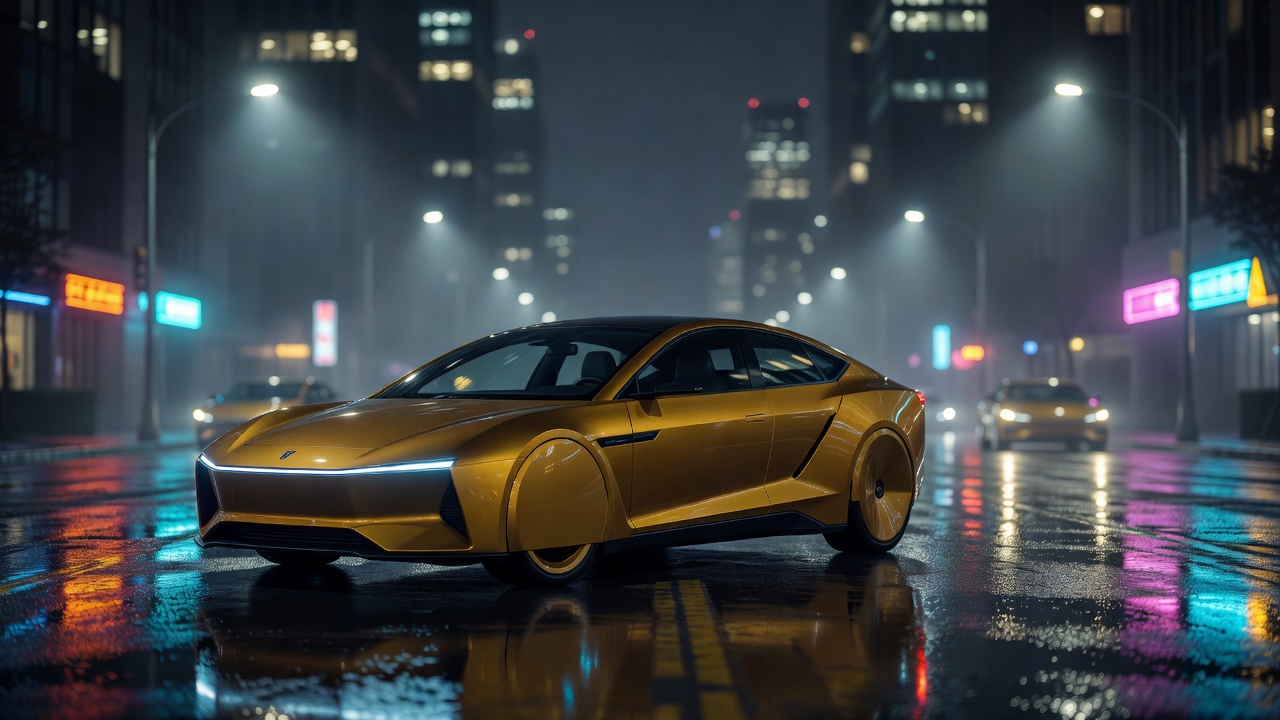
If you drive through downtown Austin this week, you'll likely pass a gold two-seat car with no steering wheel.
Then another.
One intersection had four of them waiting at the same light. A clip of the scene posted Wednesday night has more than a million views on X.
Tonight Tesla (TSLA) puts the first members of the public inside one.
Tesla has run its Robotaxi service for more than a year with Model Ys, driverless in seven metro areas. The Cybercab is the first car built for the job: two seats, no wheel, no pedals, rolling off the line at Giga Texas since February. Until now, only employees have ridden in one on public roads.
We think this is a watershed moment for TSLA. And it comes at a great time for investors.
Tesla stock is down 20% this year. And we have a front row seat to public discourse.
We can follow consumers in real time to get an early read before a shift fully shows up in the stock. We track what they’re searching for, what they’re paying for a ride, how competitors like Uber (UBER) are responding, and whether Tesla shoppers are coming back.
Here's what we see now:
Cybercab searches just hit a record
Google searches for Cybercab in the US hit their highest level ever in August, above the month Tesla first showed the car in October 2024. Searches for Waymo peaked in June 2025 and have moved sideways since.
Each line is scaled to its own peak, so the chart compares direction. Interest in Waymo has gone flat for fourteen months. Interest in Cybercab has climbed since January, before a single member of the public had ridden in one.
Another way to visualize:
To be clear, we think robotaxis at large are the future of ride hailing. Many winners will emerge. But TSLA is gaining tremendous momentum…and pricing power.
A Tesla ride costs half an Uber
Obi, a rideshare price aggregator pulled quotes on more than 94,000 ride requests in the San Francisco Bay Area between Thanksgiving and New Year's Day.
The median Tesla fare undercut competitors by a long-shot.
In Austin the gap is even wider. On September 2 one rider posted both receipts for the same trip to Terry Black's Barbecue: $12.60 in a Tesla, $28.98 in an Uber Comfort before the tip.
Tesla can flex this kind of pricing because of its massive scale and expertise. It didn’t have to figure out how to build a fleet, it already made cars. It didn't have to figure out self-driving either, with Tesla's software logging more than 13 billion miles of supervised driving under its hood.
Musk has said rides should end up costing about what a bus ticket costs.
The fleet on the road is small, for now. But competitors shouldn’t underestimate Tesla’s position or its vision. Obi measured waits close to 16 minutes for a Tesla against three to six minutes for the others, and the Texas state registry lists 420 Tesla robotaxis against 988 for Waymo. As the fleet expands, that gap will close quickly.
This tension is felt by more than Waymo…
Uber cut one in ten jobs this week
On September 2, Uber (UBER) laid off 3,300 people, its largest cut since 2020. Its chief executive told employees the company had grown too many layers and would put the savings into ridesharing, delivery, and robotaxis.
Uber has committed more than $10 billion to self-driving partners, over 30 of them, and runs Waymo cars through its own app in Austin and Atlanta. It is paying so that riders book through its app, in cars it does not own.
Tesla owns the car, the app, and the fare.
Demand is returning to Tesla vehicles, too
We count the people who visit Tesla online, where buyers order their cars. That number is up 21% since January.
The stock has traded the opposite direction.
Tesla reported a record 480,126 deliveries for the second quarter on July 22, and an operating margin of 1.4%, because its spending on AI and robotaxis is growing faster than the profit from cars.
The stock fell 14% the next day on that margin and kept falling for a week.
Shopper interest suggests consumers are warming back up to the brand. August was the busiest month for Tesla's site in a year.
Optimus is another major catalyst ready to boom
Speaking to a meeting of G20 ministers on September 1, Musk said he would bet serious money that at least a billion humanoid robots exist within ten years, each producing five times what a person can.
Tesla stopped building the Model S and X in Fremont this spring.
The same floor is being converted to build Optimus, its humanoid robot, with the first units due this quarter. Musk says output will be slow at first, because the robot has 10,000 parts that have never been mass-produced, and that it is the hardest product Tesla has ever tried to scale.
Every chart above measures the car business.
Bottom Line
We think Tesla’s transformation to an AI company in the public mind is well underway – and Austin’s Cybercab launch will only accelerate this change in mindset. Tesla has never been just about a car. The market is likely to catch up, quickly.